
Criminal Cases in the Taylor County Courts
Taylor County criminal cases divide by charge level. The 42nd, 104th, and 350th District Courts hear felony matters. The District Clerk keeps those Taylor County case files at 300 Oak Street, Suite 400, in Abilene. County Courts at Law Nos. 1 and 2 hear Class A and Class B misdemeanors, and the County Clerk is their record custodian. The clerk's posted local split assigns surnames A through K to Court at Law No. 1 and L through Z to Court at Law No. 2.
Fine-only Class C cases may stay with a municipal or justice court. A Class C appeal reaches the County Clerk, but its starting docket may remain with the issuing court. This tiered layout explains why a Taylor County criminal court search may return a felony or misdemeanor while missing a city citation. Start with the alleged offense level, issuing agency, and court shown on any citation, bond paper, or notice.
Taylor County Felony Court Routes
Three named district courts carry Taylor County felony work. The Texas Office of Court Administration directory identifies the current district courts and their contacts. The 42nd District Court is in Suite 401 and can be reached at (325) 674-1314. The 104th is in Suite 402 at (325) 674-1313. The 350th uses the same 300 Oak Street courthouse, with directory numbers (325) 298-2030 and (325) 674-1242.
The court hears and decides the matter, but the District Clerk holds the filed record. That distinction saves a false start when a reader needs a judgment, indictment, dismissal, or docket copy. The Taylor County District Clerk describes its record duties and office access. This official view also shows why a clerk record is more useful than a booking entry when the question concerns the charge actually filed or the final outcome.
The official Taylor County District Clerk page provides a visual reference for the court-record custodian.
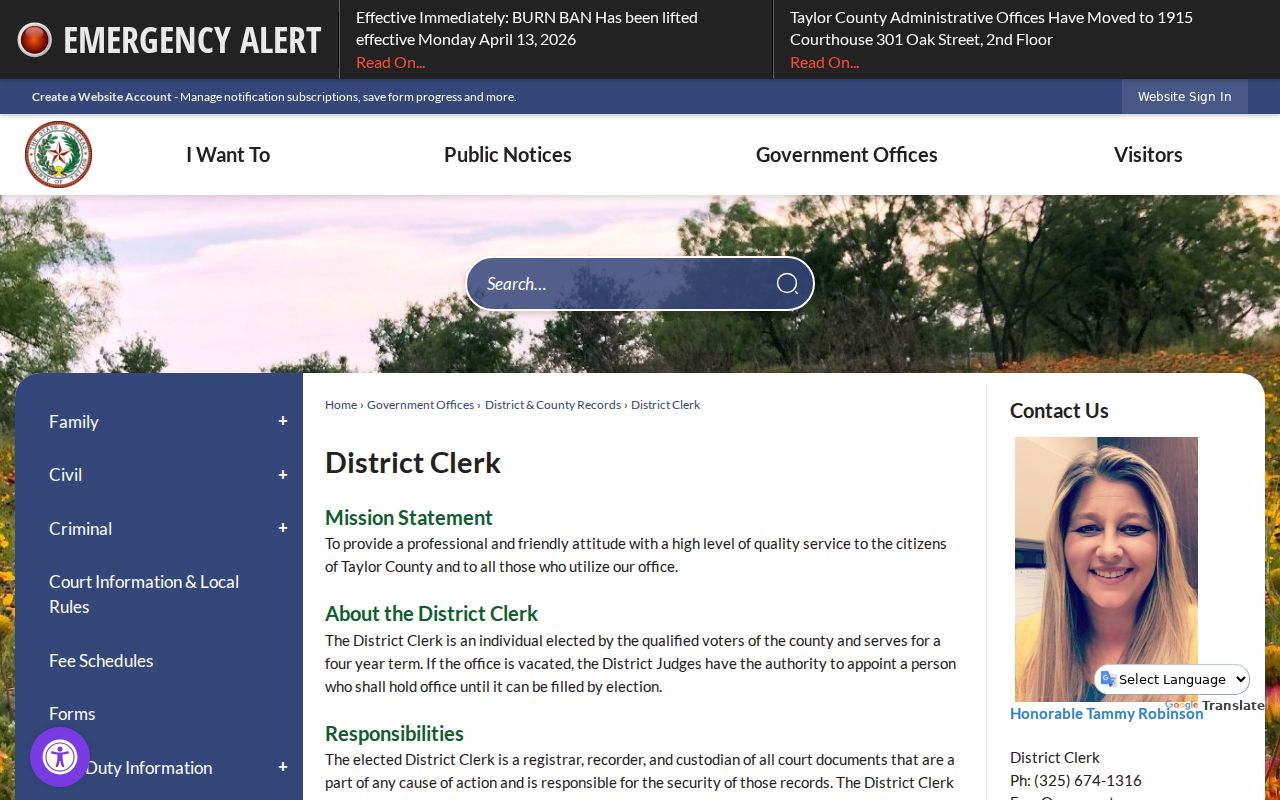
That source anchors the request route at the office that keeps Taylor County felony case documents.
How to Search Case Records
The practical public entry is Taylor County Odyssey Public Access. Choose Criminal Case Records rather than Jail Records or Jail Bond Records. A case number is the cleanest key because names can produce several matches. The portal is an index, so a result may show docket text without providing a free image of every filed paper.
- Open Odyssey and select Criminal Case Records from the location choices.
- Use the case number when known, or search the defendant's legal surname and first name.
- Narrow the results with middle name, filing dates, birth date, or court when those controls appear.
- Open the matching case and compare the court, charge count, offense date, status, and docket events.
- Request the judgment, dismissal, or indictment from the District Clerk or County Clerk when an official copy is needed.
| Field Label | Type | Required | Notes |
|---|---|---|---|
| Search type | Tabs or dropdown | Yes | Choose case, party/defendant, or attorney as offered. |
| Case Number | Text | No | Most precise; keep the punctuation shown on court papers. |
| Last Name | Text | Usually for name search | Use the legal surname and verify common-name results. |
| First or Middle Name | Text | No | These fields narrow a broad Taylor County result list. |
| Date of Birth | Date or text | Portal-dependent | Public display may shorten or suppress it. |
| Date Filed From/To | Date | No | Limits the result set by filing period. |
| Court or Location | Dropdown | No | Availability varies with the chosen Odyssey location. |
Taylor County Criminal Copy Costs
A docket entry can answer whether a Taylor County case moved, but it cannot replace a certified filing. The District Clerk's criminal-record instructions say felony requests may be made in person or in writing by mail, attention Criminal Felony Court Records. A request should name the exact item, such as the indictment, judgment, sentence, or dismissal.
Plain and certified copies cost $1 per page. Full payment is due before release. A case number avoids the $5 research fee; without one, describe the case well enough for staff to search. The District Clerk is at 300 Oak Street, Suite 400, Abilene, TX 79602, and the listed phone is (325) 674-1316. For Class A or B misdemeanors, contact the County Clerk at the same street address and (325) 674-1202.
What the Case File Shows
A Taylor County criminal case file records the prosecution rather than just the arrest. It links the filed charge to settings, motions, pleas, rulings, and the outcome. The public index may also show parties, attorneys, bond or cost summaries, and hearing entries. Some document descriptions appear even when the underlying PDF cannot be downloaded.
| Case Number & Court | The unique file reference, filing date, assigned Taylor County court, case type, and current status. |
|---|---|
| Charging Document | A complaint, misdemeanor information, or felony indictment that states the accusation filed with the court. |
| Docket Entries | A dated index of settings, motions, pleas, warrants or capias entries, orders, and later proceedings. |
| Hearing Dates | The date, time, hearing type, and assigned court when public. |
| Disposition & Judgment | The result for each count, which may be dismissal, acquittal, deferred adjudication, or conviction. |
| Sentence & Conditions | Confinement, community supervision, fines, costs, restitution, or other terms stated in the judgment. |
Match each disposition to its count. One count may be dismissed while another ends in a plea. Redacted identifiers, protected victim data, sealed material, and juvenile information should not appear in an ordinary public view.
Taylor County Case Disposition Terms
Short docket labels can change the meaning of a Taylor County search result. A dismissal ends a charge without a conviction. Deferred adjudication means the court deferred a finding of guilt while supervision proceeded; successful completion does not itself erase the file. A conviction reflects an adjudication and judgment. An acquittal is a not-guilty outcome after adjudication.
- Disposition
- The recorded outcome of a charge or case.
- Indictment
- A grand jury's formal felony accusation.
- Information
- A prosecutor-filed charging instrument often used for a misdemeanor.
- Capias
- A court writ directing arrest, often tied to an indictment or a failure in the case.
- Docket
- The chronological index of filings, settings, orders, and other events.
Note: A Taylor County docket status is an index entry; the signed judgment or dismissal is the authoritative case outcome.
Stages of a Criminal Case
After an arrest, a magistrate gives warnings and addresses counsel and release conditions. Prosecutors then screen the allegation. A misdemeanor information or felony indictment becomes the filed accusation. Arraignment and pretrial settings follow. The Taylor County case can end through dismissal, plea, trial and acquittal, or conviction and sentence. Appeals, motions to revoke, and later supervision proceedings can add more docket entries.
Case flow: Charges Filed › Arraignment › Pretrial › Plea or Trial › Disposition › Sentencing
The booking charge may differ from the count filed later. For that reason, use the Taylor County court file to answer what the state prosecuted, and use the signed final order for the result. The broader Taylor County arrest history remains a separate agency and jail record.
Taylor County Criminal Standing Orders
Taylor County publishes local court materials through the state's rules repository. The Taylor County local-rules page identifies a Standing Discovery Order for Criminal Cases and a Standing Order on Mental Health Assessment Records. These named authorities can explain why a docket references a standing order without attaching a custom order in every file.
The official Taylor County local-rules repository confirms that the orders exist. It does not prove that any given person qualifies for a program, that protected assessment content is public, or that every filing appears in Odyssey. Read the order with the docket and ask the clerk about access to a listed document.
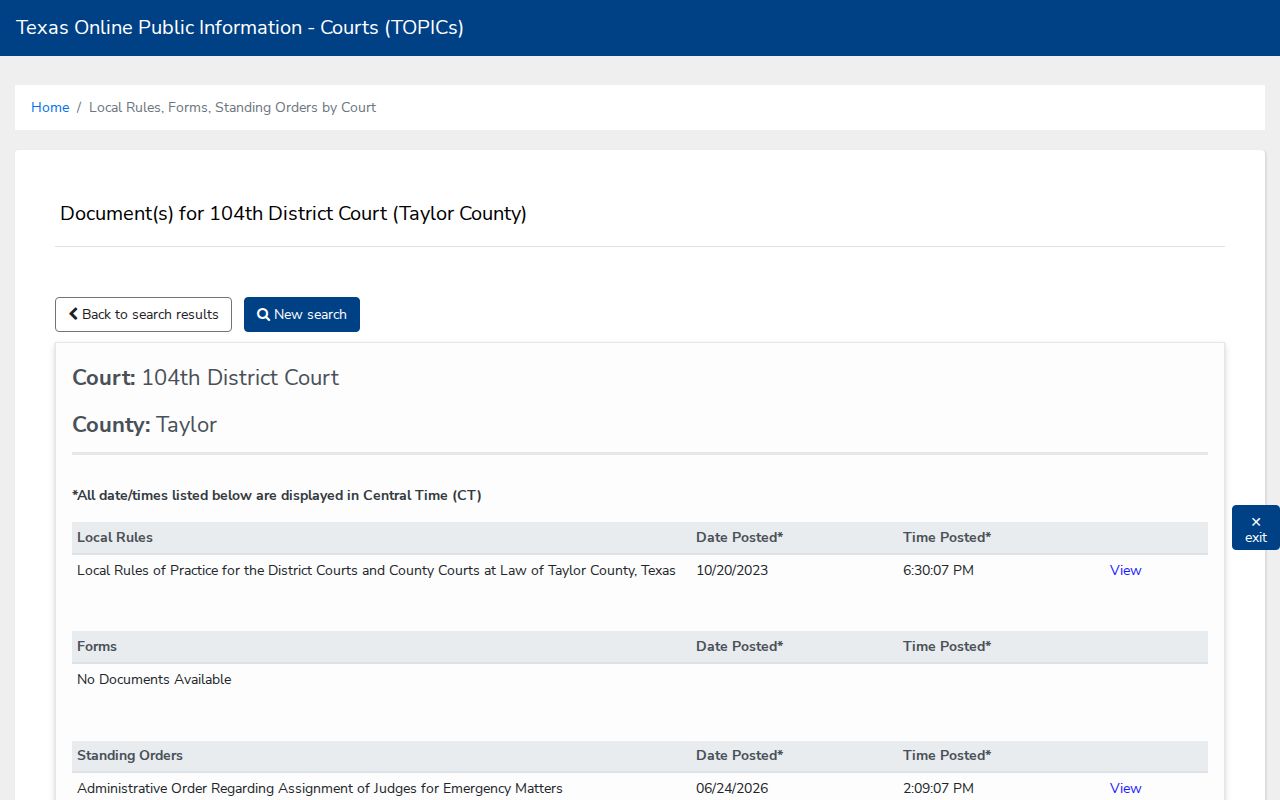
The published rules give local procedural context while the clerk's file remains the source for a specific Taylor County prosecution.
Taylor County Federal Case Boundary
Federal criminal cases arising in Taylor County do not appear in Odyssey. Taylor County lies in the Abilene Division of the U.S. District Court for the Northern District of Texas. Its Abilene courthouse is at 341 Pine Street, Room 2008, Abilene, TX 79601. Federal searches run through PACER, which requires registration and supports party or case-number research.
PACER posts a rate of $0.10 per page, generally caps one document at $3, and waives quarterly usage of $30 or less. Sealed filings remain unavailable.
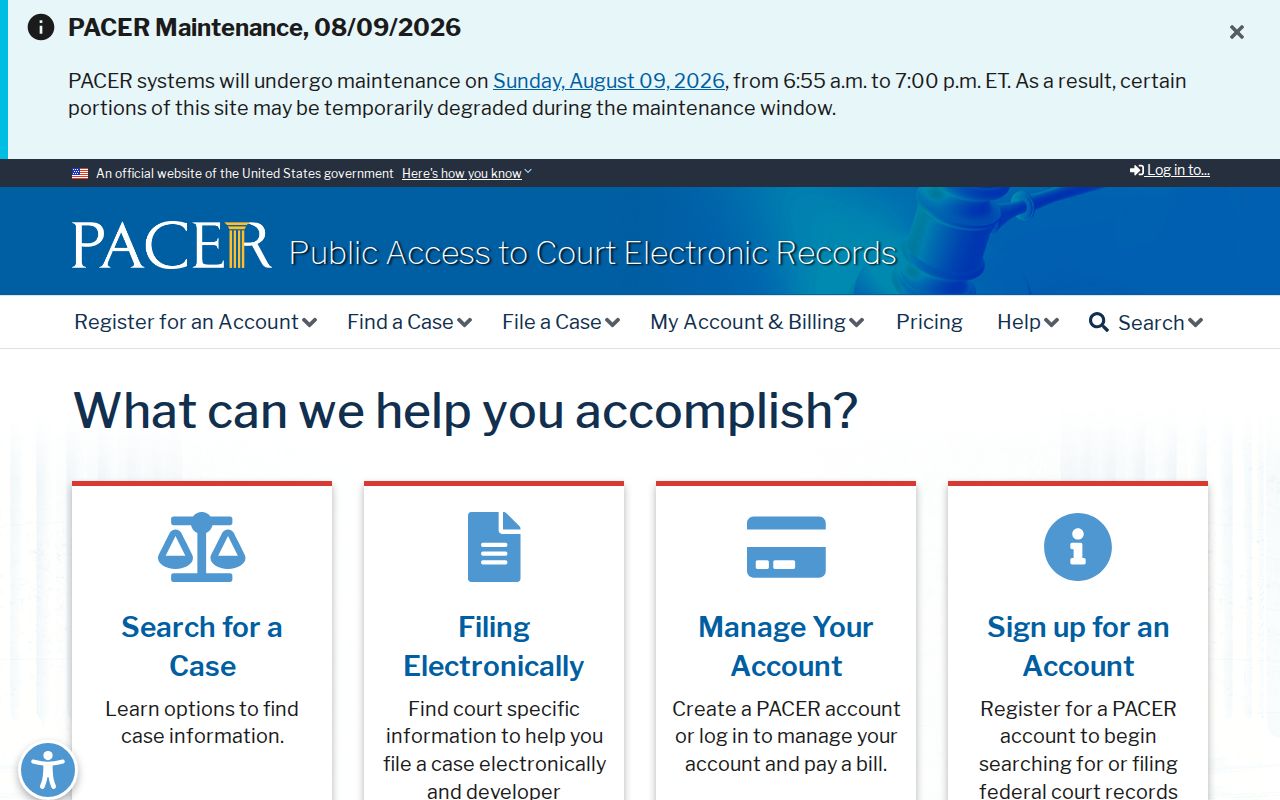
PACER is the document access point when the case belongs to federal court rather than Taylor County.
The Northern District of Texas official site identifies the court and its Abilene division.
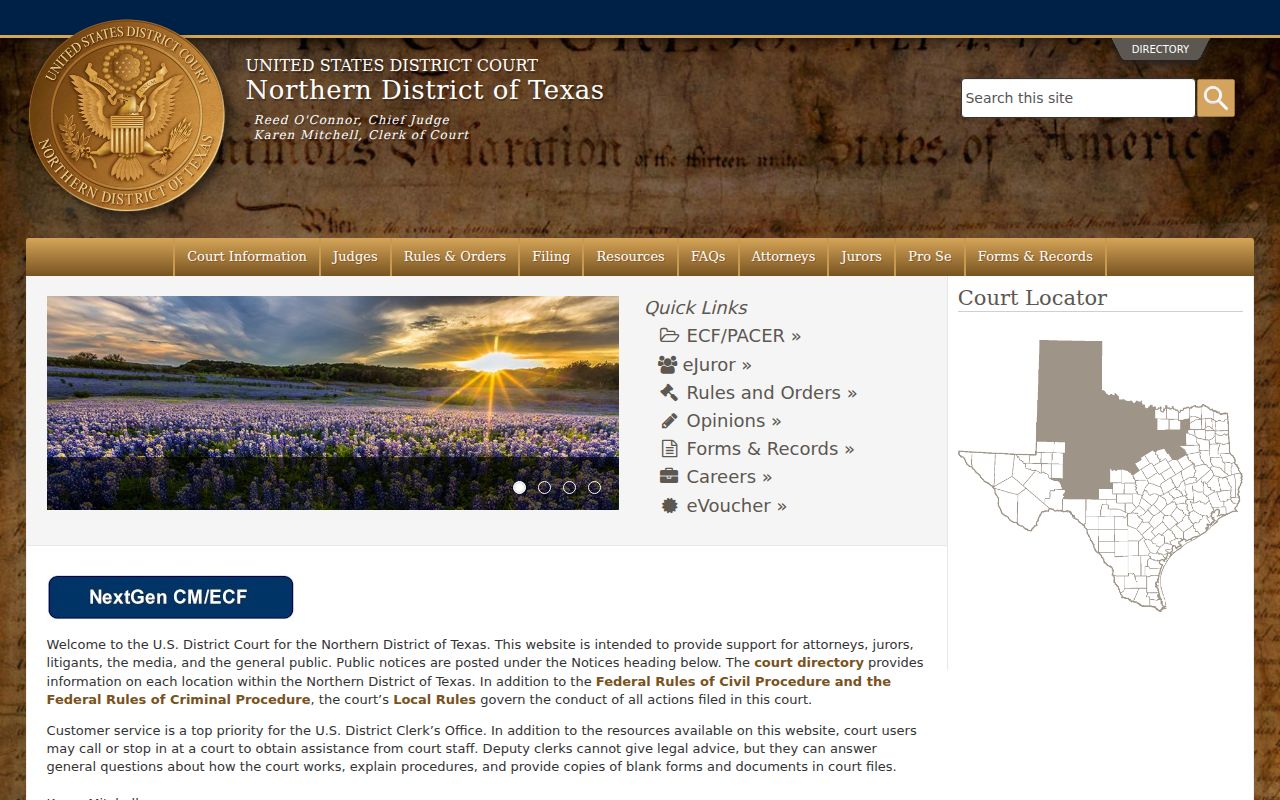
That jurisdictional check prevents a fruitless search in the Taylor County criminal location.
Access & Restrictions
Texas court records are generally available through the clerk unless a law or court order restricts access. Filed case records are not handled in exactly the same way as executive-agency requests under the Texas Public Information Act. Rule 12 of the Texas Rules of Judicial Administration governs judicial administrative records, while the clerk supplies filed case material under court-record rules.
Taylor County public results may omit or redact personal identifiers, victim or minor data, protected medical material, juvenile records, and content under expunction, nondisclosure, or sealing orders. An online miss does not prove that no file exists. Older records, indexing delays, a spelling issue, the wrong court tier, or a restricted case can all explain an empty result. Give the clerk a case number when possible and ask whether the file is available in another format.